cereyan
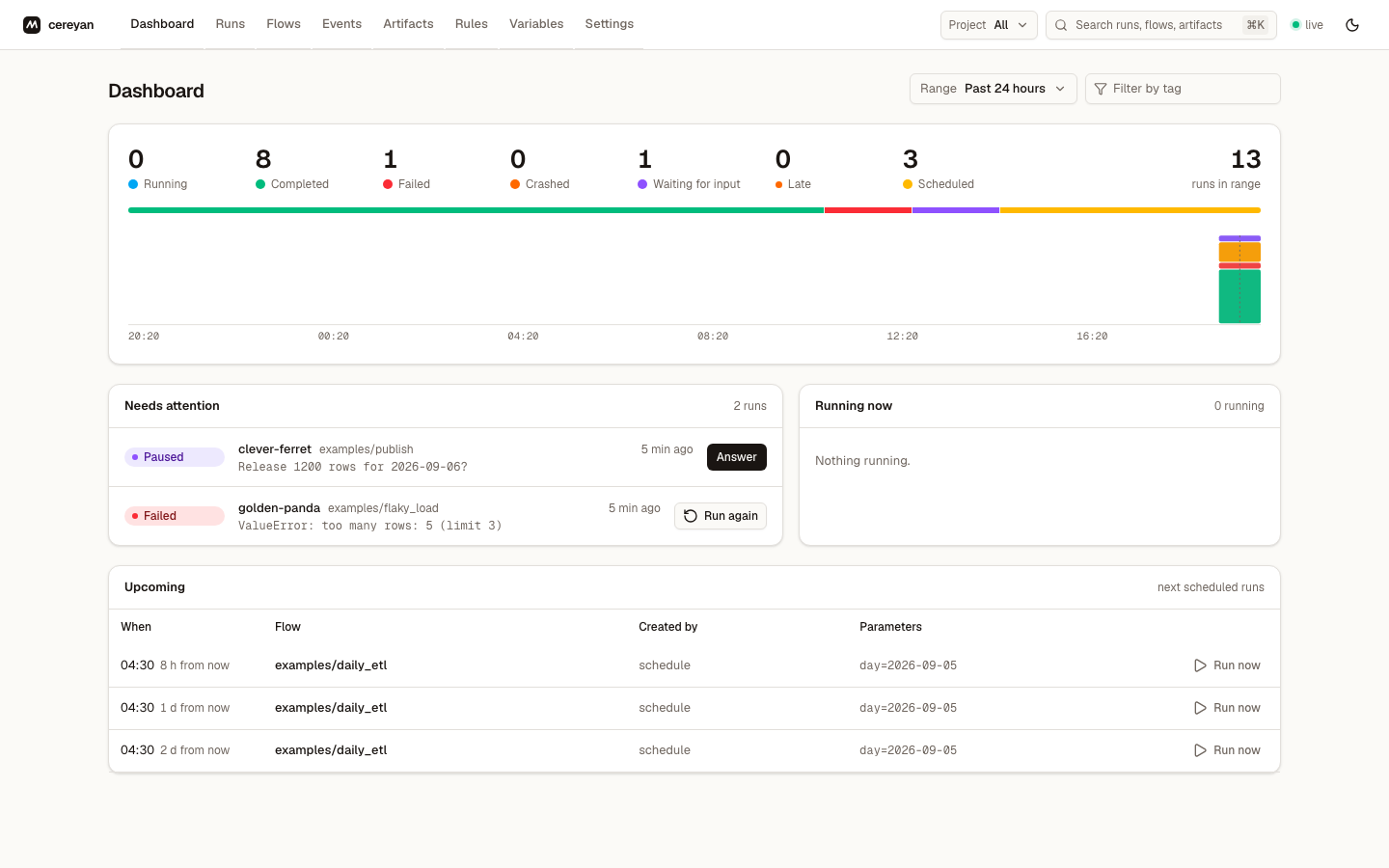
Cereyan is a minimal, local-first orchestrator for Python data pipelines. A Rust core (SQLite store, state machine, scheduler, HTTP server) sits behind a thin layer of Python decorators, and the whole thing ships as one wheel with no runtime dependencies.
from datetime import date
from cereyan import flow, task

@task
def extract(day: date) -> list[int]:
    return [1, 2, 3]

@flow(run_name="etl-{day}")
def etl(day: date) -> int:
    return sum(extract(day))

assert etl(date(2026, 9, 6)) == 6   # recorded as a run in ~/.cereyan/db.sqlite
- Offline first.
python pipeline.pyrecords runs into a local SQLite file. Nothing else needs to run. - One process to serve.
cereyan serve dir/hosts the API, the UI, the scheduler, a warm pool of engine processes, and a built-in MCP server for agents. - Data-pipeline semantics. Targets make reruns idempotent, backfills cover date ranges, resources are named semaphores, flows chain and fan in by key, and rules react to events or to their absence.
Where to go
-
From
pip installto a scheduled, retried, backfilled pipeline in ten minutes. -
The model: App, flow, task, run, state, schedule, target, resource, backfill, artifact, variable, event, rule.
-
One goal per page, from retries to running the server as a service.
-
Every option, command, route, event, state, and configuration key.
Agents can read the whole site as one file: llms.txt is the index and llms-full.txt is the full text.